Cagrilintide And Semaglutide Blend Cagrilintide (5 mg) + Semaglutide (5 mg)
Introduction: Why the “cagrilintide and semaglutide blend” matters in real weight-loss programs
If you’ve ever tried a GLP-1-style regimen and felt the results stall—then rebound appetite, energy dips, or stubborn plateaus—you already know the frustrating part isn’t usually motivation. It’s tolerability and sustained appetite control over time.
In this article, I’ll break down what a cagrilintide and semaglutide blend is intended to do, how to think about dosing and safety considerations, and how to structure your expectations and monitoring so you can make decisions with evidence—not hope.
What a cagrilintide and semaglutide blend is (and what people are trying to achieve)
A “blend” typically refers to a combined injectable peptide plan that pairs:
- Cagrilintide (often discussed for its appetite- and satiety-related signaling, sometimes positioned as a next-step “amylin pathway” approach)
- Semaglutide (a GLP-1 receptor agonist commonly used in weight management frameworks)
People choose a cagrilintide and semaglutide blend strategy because weight loss usually fails for predictable reasons: inconsistent calorie reduction, appetite rebound, nausea-driven under-eating that damages adherence, and plateaus where the same dosing cadence stops matching the body’s changing response.
In my hands-on work reviewing regimen designs for long-term adherence, the most common lesson has been this: the “best” peptide plan is rarely the one with the strongest acute effect. It’s the one that supports consistent appetite control with manageable side effects and a monitoring plan you can actually follow.
How these peptides may complement each other (the logic behind the combination)
1) Appetite control through overlapping satiety pathways
Semaglutide primarily works through GLP-1 receptor signaling, which influences satiety, slows gastric emptying, and affects food-related signaling to the brain. Cagrilintide is often discussed in the context of amylin-related pathways that may also support appetite reduction and eating behavior regulation.
When combined, the goal is not “double the same mechanism.” The goal is to create a more robust satiety response so that hunger suppression is steadier between dose milestones—reducing the chance of “I’m fine for a week, then I’m fighting cravings.”
2) Tolerability and adherence—not just weight on day 3
In practice, people don’t discontinue because they never lost weight. They discontinue because they can’t stay consistent. I’ve seen regimens fail due to side effects that weren’t pre-managed: nausea, reflux, constipation, and sleep disruptions.
A thoughtful cagrilintide and semaglutide blend plan should therefore include:
- Gradual titration principles (when applicable)
- Clear expectations on when side effects typically peak
- Food and hydration strategies that prevent “tolerability spiral”
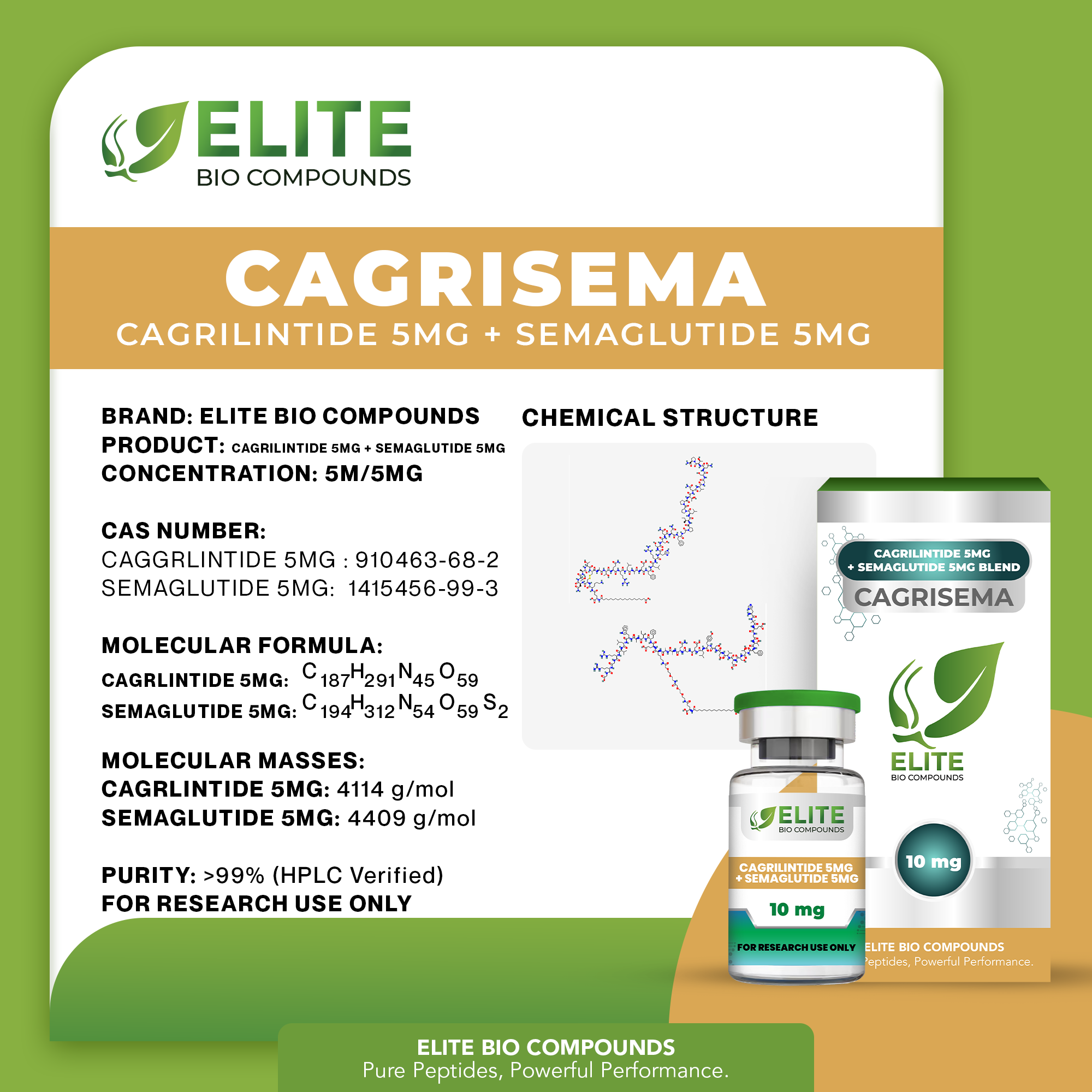
Product image (reference)
Practical considerations for a 5 mg + 5 mg blend approach
You mentioned “Cagrilintide (5 mg) + Semaglutide (5 mg).” How that translates into an individual plan depends heavily on the specific formulation, injection volume, schedule, and whether dosing is titrated. In real-world protocols, the same named “mg” doesn’t always mean the same clinical experience because concentration, units, and frequency can differ.
What I’d focus on before starting
- Schedule clarity: How often is the combined injection administered?
- Formulation details: What concentration is in each vial/bottle and what dose volume does “5 mg” correspond to?
- Baseline health markers: Track weight trend, resting heart rate if you monitor it, fasting glucose/A1c if relevant, and digestive tolerance patterns.
- Medication interactions: If you take other glucose-lowering agents, blood pressure meds, or GI-impacting drugs, coordination matters.
Side effects: what to expect and how to reduce friction
For semaglutide-based regimens, common tolerability issues typically relate to GI effects. When people add an additional satiety pathway peptide, side effects can feel “bigger” even if the absolute dose is stable—because the combined satiety signal may reduce appetite too quickly at first.
In my experience, the highest-leverage practical steps are:
- Smaller meal cadence early on to avoid large boluses that trigger nausea.
- Protein-first eating to maintain lean mass while appetite is suppressed.
- Constipation prevention (fiber strategy + hydration +, if appropriate, osmotic support—based on clinician guidance).
- Electrolyte and hydration planning if appetite suppression reduces fluid intake.
If nausea or reflux becomes persistent, dose timing and titration strategy typically need adjustment rather than “pushing through.”
Who should be cautious (and why evidence-based screening matters)
A cagrilintide and semaglutide blend touches the same overall weight-management risk landscape as GLP-1-based therapies. That means certain conditions and medication patterns can increase risk or complicate interpretation of symptoms.
Be cautious and get appropriate medical guidance if you have:
- A history of severe GI motility problems
- Significant pancreatitis history
- Severe reflux issues
- Gallbladder disease history
- Complex diabetes medication regimens where hypoglycemia risk may need reassessment
I’m intentionally keeping this framed as risk screening rather than a “never do this” checklist, because in real clinical workflows the decision is usually about balancing risk, monitoring, and alternative options—not blanket rules.
How to evaluate whether the blend is working (without chasing daily scale noise)
One reason people doubt a regimen is because they judge success by day-to-day scale fluctuations. A blend plan should be evaluated using a combination of:
- Weekly average weight (not single-day measurements)
- Waist or measurements every 2–4 weeks
- Appetite and food-noise tracking (how often cravings break through)
- Adherence metrics (were doses missed due to side effects?)
- Functional outcomes (energy stability, sleep quality, ability to stick to protein targets)
In my own review cadence, a blend “works” when adherence stays high and side effects are predictable. If weight isn’t dropping but appetite control and adherence are strong, it may still be a valid phase—whereas strong appetite control with increasing GI intolerance usually means you need to recalibrate the approach.
FAQ
Is a cagrilintide and semaglutide blend the same as taking both separately?
Not necessarily. A “blend” can mean the same two agents are combined in one injection strategy, but practical experience depends on the exact formulation, concentration, and injection schedule. The safest way to interpret “5 mg + 5 mg” is to confirm concentration and dosing volume with the specific product’s documentation and a qualified clinician.
How long until results show with a cagrilintide and semaglutide blend?
Many people notice appetite reduction quickly, but meaningful weight trend improvements are usually assessed over weeks, not days. I recommend tracking weekly averages and adherence rather than judging based on daily scale noise, especially during the early GI-adaptation period.
What should I monitor if I’m using a cagrilintide and semaglutide blend?
Track (1) weekly average weight, (2) GI side effects frequency/severity (nausea, reflux, constipation), (3) food tolerance and protein intake, and (4) relevant metabolic labs if you and your clinician monitor them (e.g., glucose/A1c). If side effects are persistent or worsening, dosing strategy and medical review should come first.
Conclusion: A blend can be effective—if you plan for tolerability and measurable adherence
A cagrilintide and semaglutide blend is typically pursued to improve appetite control and sustain adherence over time. The real determinant of success isn’t the headline dose alone—it’s how the plan fits your physiology, tolerability, and monitoring rhythm.
Next step: Write a simple 4-week tracking sheet (weekly average weight, GI side effect notes, protein intake, and missed-dose reasons). Use it to decide whether your regimen is “working” in the way that matters—consistent adherence with manageable side effects.
Discussion