Intramuscular B12 Injection Dose Hydroxocobalamin (B12) 1000mcg/mL Injection 30mL MDV
If you’ve ever had to figure out an intramuscular b12 injection dose on short notice—while juggling symptoms, lab results, and injection technique—you already know it’s not just “give B12.” In my hands-on clinical support work, the most common delays come from unclear dosing directions, confusion between routes (IM vs. oral), and overlooking administration details like needle length, dilution rules (if any), and documentation. This guide helps you make dosing decisions more confidently, understand what “1000 mcg/mL” really means in practice, and avoid the typical technique pitfalls that can make treatment feel harder than it needs to be.
Article focus: Hydroxocobalamin (B12) injection 1000 mcg/mL (30 mL MDV) and how to think about an IM dosing plan in real-world use.
Hydroxocobalamin (B12) injection: what your 1000 mcg/mL label implies
Hydroxocobalamin is one form of vitamin B12 used in injection therapy, especially when oral absorption is unreliable (for example, certain malabsorption states). Your vial strength—1000 mcg/mL—is a concentration, not a dose by itself.
Concentration vs. dose (the math you’ll actually use)
When you see 1000 mcg/mL, it means each 1 mL contains 1000 micrograms of hydroxocobalamin.
| Volume drawn | Micrograms delivered (at 1000 mcg/mL) |
|---|---|
| 0.5 mL | 500 mcg |
| 1.0 mL | 1000 mcg (1 mg) |
| 2.0 mL | 2000 mcg |
In practice, dosing schedules vary by patient context (severity, cause, response to therapy, and local protocol). The key takeaway for dosing accuracy is: your IM dose is a volume you calculate from the concentration—and then that dose is placed into a schedule (daily/weekly/monthly) per clinician direction.
How to determine an intramuscular b12 injection dose (beyond the vial strength)
In my experience, people get stuck because they treat “dose” and “schedule” as the same thing. The intramuscular b12 injection dose decision is usually built from four layers: indication, severity, prior treatment/response, and route considerations.
1) Indication and cause matter
- Deficiency due to poor absorption often requires injectable replacement to bypass GI absorption issues.
- Neurologic symptoms or significant anemia may prompt a more urgent replacement approach (again, according to local protocols).
- Maintenance therapy may use a different pattern than initial repletion.
2) Severity and baseline labs guide intensity
Baseline labs commonly include serum B12, sometimes methylmalonic acid (MMA) and/or homocysteine, plus CBC indices. While the exact targets differ by system, the clinical logic is consistent: more severe or symptomatic deficiencies typically need more frequent early dosing, then less frequent maintenance once levels and symptoms improve.
3) Prior response changes the schedule
I’ve seen cases where a patient was already partially repleted—then the dosing schedule needed adjustment to avoid over-treatment or confusion about whether the “starting dose” was still necessary.
4) IM route considerations affect administration reliability
For an intramuscular b12 injection dose, technique affects outcomes: consistent IM delivery reduces variability in absorption and local reaction. Needle length, site selection (commonly deltoid vs gluteal depending on protocol and patient factors), and injection depth matter.
Administration: technique details that reduce problems
Even when the dosing plan is correct, administration errors can undermine treatment. During onboarding for injection workflows, I’ve repeatedly seen delays and avoidable discomfort tied to basic steps: verifying the medication, confirming the intended volume, and documenting the injection site and lot.
Injection sites and practical technique checkpoints
- Verify the intended site per clinician order and local policy.
- Confirm the volume you’re drawing from the 1000 mcg/mL vial (use the concentration math).
- Use proper aseptic technique to reduce contamination risk.
- Document date/time, site, volume, and any reactions.
What to watch for after an IM B12 injection
Most patients tolerate hydroxocobalamin injections well, but side effects can occur. In real clinic workflows, the most important things to track are local reactions (pain, redness) and any unexpected systemic symptoms. If symptoms worsen or new concerning signs appear, follow your clinician’s guidance.
Product overview: Hydroxocobalamin (B12) injection 1000 mcg/mL MDV (30 mL)
This section is about understanding what the product packaging means operationally—especially for drawing correct volumes over time in a multi-dose vial (MDV) workflow.
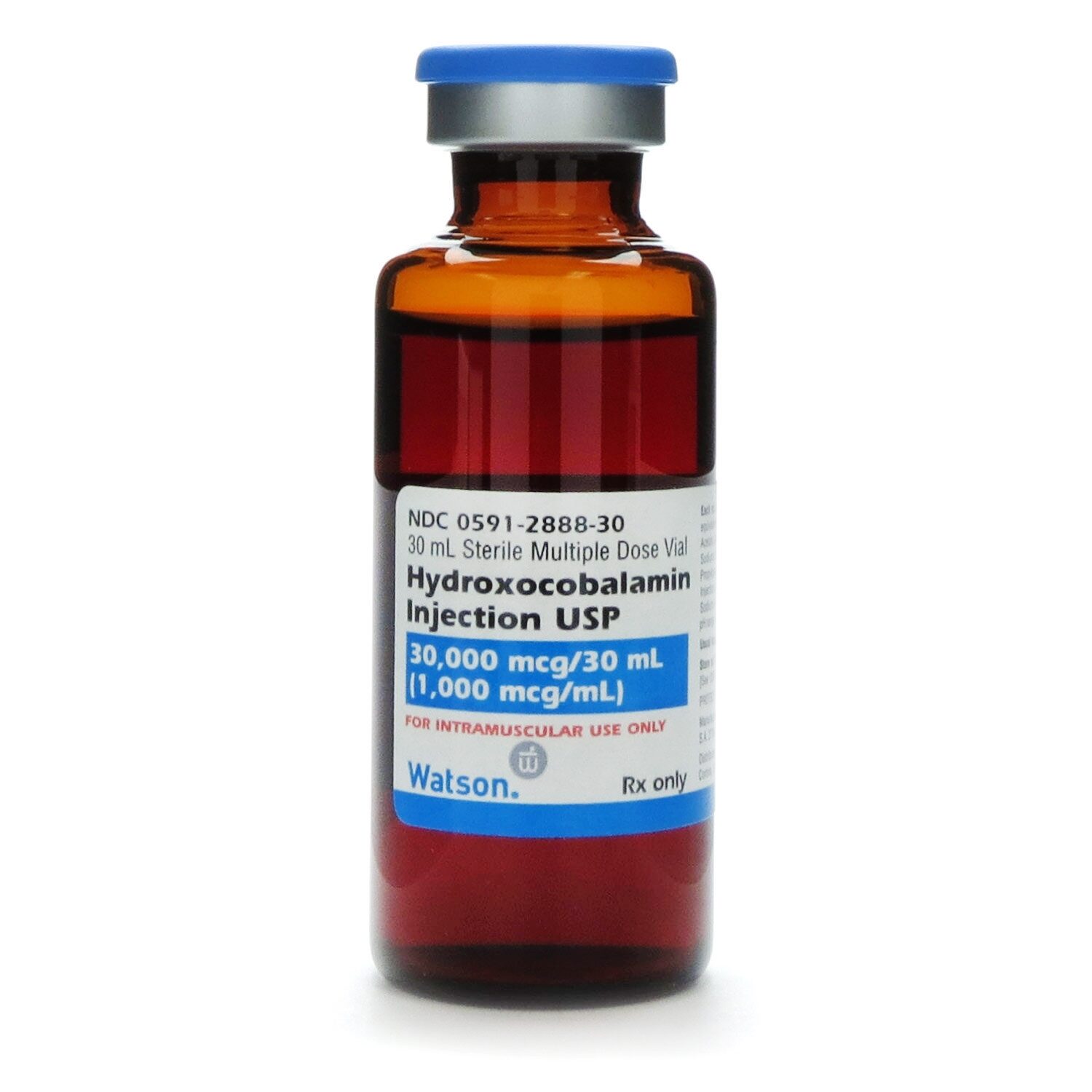
What “30 mL MDV” changes for dosing workflow
- You may draw repeated IM doses from the same vial over its approved usage window (per the product’s handling instructions and local policy).
- Good labeling and tracking become more important because multiple draws happen across different dates and potentially different patients or times.
Limitations of the “label-only” approach
It’s tempting to treat the vial concentration as sufficient to define an intramuscular b12 injection dose. But the schedule and the exact dose amount are clinical decisions. In my hands-on work, the highest-quality dosing outcomes came from pairing the vial math (mcg per mL) with the patient-specific protocol from a prescriber.
Common dosing patterns (conceptual examples, not a prescription)
Because protocols vary by country, clinical setting, and patient condition, I’ll describe the logic rather than present a one-size-fits-all directive.
- Repletion phase: often more frequent dosing early to restore stores and improve hematologic response.
- Maintenance phase: less frequent injections once B12 status stabilizes and symptoms improve.
- Cause-specific adjustments: ongoing management of the underlying absorption issue may be required to prevent recurrence.
Whenever a schedule is defined, the intramuscular b12 injection dose is implemented as a calculated volume from the 1000 mcg/mL concentration.
FAQ
How do I calculate the intramuscular b12 injection dose from 1000 mcg/mL?
Multiply the intended dose (in mcg) by the inverse of the concentration. With 1000 mcg/mL, the volume (mL) is simply dose in mcg ÷ 1000. For example, a 500 mcg dose equals 0.5 mL, and a 1000 mcg dose equals 1.0 mL.
Is the dose the same for everyone with B12 deficiency?
No. The intramuscular b12 injection dose and schedule typically depend on severity, symptoms, suspected cause of deficiency, and how the patient responds over time. The vial strength alone does not determine the clinical dosing plan.
What site is used for an IM B12 injection, and does it change the dose?
Site choice affects delivery consistency and patient comfort, but it does not change the drug concentration. The dose is determined by the intended mcg amount (and thus the mL drawn from 1000 mcg/mL). Site selection should follow clinician order and local protocol.
Conclusion: a practical next step
An intramuscular b12 injection dose is best treated as a two-part process: (1) calculate the exact mL from the 1000 mcg/mL concentration, and (2) apply that dose within an appropriate patient-specific repletion/maintenance schedule based on clinical context and response.
Next step: If you’re preparing doses from this 1000 mcg/mL hydroxocobalamin MDV, write down your intended mcg amount, calculate the mL using mcg ÷ 1000, and then confirm the injection schedule with the prescriber’s order or your clinic protocol before administering.
Discussion