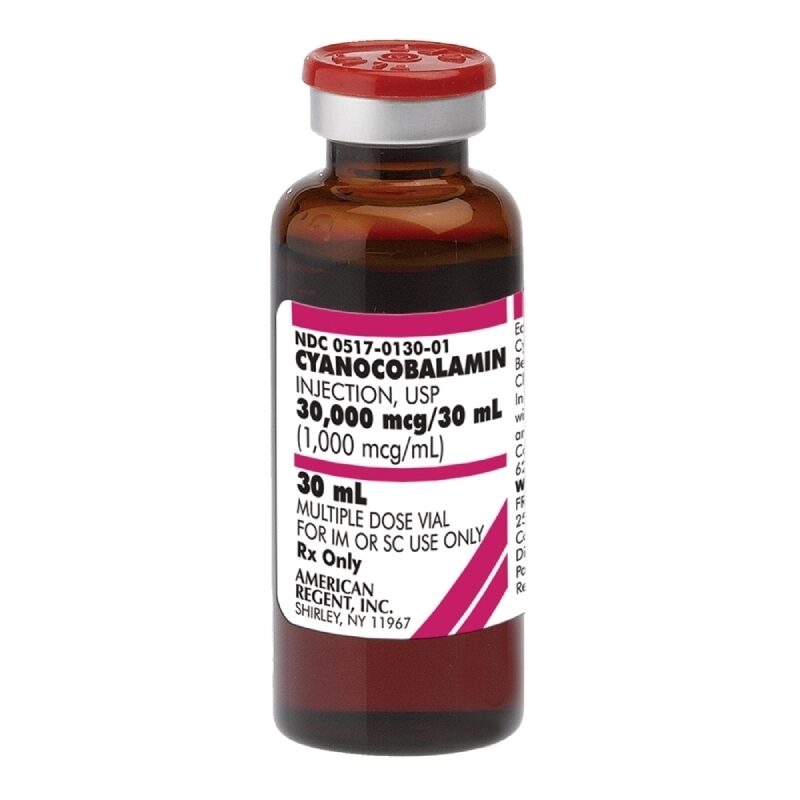
1000 Mcg B12 Injection Cyanocobalamin (B12) 1000mcg/mL Injection 30mL MDV
Why a “1000 mcg B12 injection” still isn’t a one-size-fits-all fix
I’ve seen this exact pattern in my hands-on work: a patient feels tired, has tingling, or gets flagged for low B12, and someone reaches for 1000 mcg b12 injection as the answer. But when we slow down and look at the cause—dietary deficiency, absorption problems, medication effects, or a lab pattern that suggests something else—the injection becomes either a helpful tool or a missed opportunity.
In this guide, I’ll walk through how cyanocobalamin (B12) 1000mcg/mL injection 30mL MDV typically fits into treatment, what clinicians monitor, and how to think about dosing schedules and safety in practical terms—so you can use it more confidently and appropriately.
What “cyanocobalamin (B12) 1000mcg/mL injection 30mL MDV” actually means
The product name breaks down into several useful details:
- Cyanocobalamin: the synthetic form of vitamin B12 commonly used in injections. In the body, B12 is converted to active coenzyme forms needed for red blood cell production and neurologic function.
- 1000mcg/mL: each milliliter contains 1000 micrograms of B12. That high concentration matters when clinicians calculate the volume to draw for a specific dose.
- Injection: administered via healthcare-provided routes (commonly intramuscular in many protocols, depending on the indication and local practice).
- 30mL MDV: multiple-dose vial containing a larger volume—useful when repeated administrations are needed, but still handled under aseptic technique and storage requirements.
In my experience, the confusion usually isn’t the wording—it’s the dose math. For example, if a protocol calls for a 1 mL injection, that’s 1000 mcg. If a protocol calls for a smaller volume (for instance 0.5 mL), then the delivered amount is 500 mcg. Always align the drawn volume with the prescribed units, not just the vial strength.
How 1000 mcg B12 injections help (and when they don’t)
Mechanisms that make B12 injections effective
B12 injections are especially valuable when absorption is impaired. Oral supplementation can work for many people, but I’ve repeatedly seen that when intrinsic factor is low, absorption is compromised (for example, certain gastrointestinal conditions), or medications interfere, an injection bypasses the gut.
Clinically, B12 support can lead to:
- Improved hematologic markers: supporting red blood cell production and helping resolve megaloblastic anemia patterns when present.
- Neurologic symptom stabilization: tingling, numbness, or burning sensations may improve, though recovery can take time and depends on duration of nerve involvement.
- Symptom improvement: energy and cognitive fog can improve as deficiency is corrected—again, timing varies.
Why “high dose” doesn’t automatically mean “fast”
One real-world lesson I learned early: patients sometimes expect immediate symptom resolution. If deficiency has been present for months or longer, neurologic recovery may be slower, and some symptoms may not fully reverse even after B12 levels normalize. That’s not a reason to avoid treatment—it’s a reason to set expectations and monitor the response.
Common scenarios where the injection may not be the right lever
Even with a low B12 level, persistent symptoms can come from other factors. I’ve had cases where fatigue improved partially after B12, but ongoing issues pointed toward contributors such as thyroid dysfunction, iron deficiency, sleep disruption, diabetes, or neuropathies unrelated to B12.
So, the injection is part of a bigger clinical picture: diagnosis, lab interpretation, and follow-up matter.
Dosing realities: understanding volume, schedule, and monitoring
Dosing schedules for B12 injections vary by indication, baseline labs, and clinical response. I can’t replace an individual prescription, but I can explain the logic clinicians use so the plan makes sense.
1) Dose strength vs delivered dose (the practical math)
With 1000 mcg/mL, the key is volume. If a provider prescribes:
- 1 mL: delivers 1000 mcg
- 0.5 mL: delivers 500 mcg
- 0.25 mL: delivers 250 mcg
That’s why clinicians confirm the prescribed dose in micrograms or the intended volume in mL—then document the administered amount.
2) Typical escalation and maintenance logic
Many protocols use an initial phase to correct deficiency, followed by a maintenance approach. I’ve seen practical examples where:
- Initial phase: more frequent dosing to restore stores and address hematologic needs.
- Maintenance phase: less frequent dosing to prevent recurrence when the underlying cause persists.
The “right” schedule depends on whether the issue is dietary (often improves with oral intake later) versus an absorption problem (often requires longer-term injections).
3) What clinicians typically monitor
Monitoring isn’t only about a single number. In my hands-on work, we usually look at a combination such as:
- Serum B12: to confirm levels rise as expected
- Complete blood count (CBC): to track anemia and red blood cell indices
- Neurologic symptoms: functional improvement, stability, or progression
- Sometimes additional markers: like methylmalonic acid or homocysteine, depending on the situation
If symptoms don’t improve, clinicians reassess the diagnosis and look for coexisting causes of fatigue or neuropathy.
Using a multiple-dose vial safely (MDV handling basics)
Multiple-dose vials are convenient for repeated administrations, but safety and technique matter. In real clinics, the difference between smooth administration and avoidable complications often comes down to handling practices.
Key handling considerations
- Aseptic technique: preventing contamination each time the vial is accessed.
- Storage requirements: following labeling for temperature and light exposure.
- Inspection before use: checking appearance and expiration guidance.
- Documentation: recording dose, lot number, and administration date where applicable.
If you’re administering through a healthcare setting, ask the team what their process is for MDV access and storage. If you’re self-administering (where permitted and trained), follow the prescribing clinician’s instructions and local guidance precisely.
Side effects and safety: what to watch for with B12 injections
Most people tolerate B12 injections well. Still, I tell patients to be alert to symptoms that should trigger medical advice.
Possible side effects
- Injection site reactions: soreness, redness, or swelling
- Headache or mild GI upset: in some people
- Allergic reactions (rare): itching, rash, facial swelling, breathing difficulty—seek urgent care if these occur
When to contact a clinician promptly
- Symptoms of allergy or severe reaction
- No improvement after an appropriate interval, or worsening neurologic symptoms
- New or concerning lab changes as reviewed by your clinician
My best advice is to treat B12 as a targeted therapy: follow the plan, monitor response, and re-check the diagnosis if the expected course doesn’t happen.
FAQ
Is a 1000 mcg B12 injection the same as “B12 deficiency treatment”?
It’s one common treatment approach, especially when absorption is impaired, but the correct plan depends on the cause of deficiency, baseline labs, and expected recovery timeline. The injection strength helps deliver dose reliably; it doesn’t replace diagnosis and follow-up.
How long does it take to feel better after B12 injections?
Hematologic improvement can occur within weeks, while neurologic symptom improvement can take longer and may be incomplete if nerve damage has been present for a while. The timeline varies by how long the deficiency existed and whether other issues are contributing.
Can I use the 30 mL MDV for multiple doses over time?
Typically yes, under the prescribing clinician’s plan, with strict aseptic technique and adherence to storage/expiration guidance on the vial and local protocols. The vial being “multiple-dose” does not mean it’s appropriate to access it casually or beyond labeled time frames after puncture.
Conclusion: the practical next step
1000 mcg b12 injection (cyanocobalamin 1000mcg/mL) can be a powerful, reliable way to correct deficiency—particularly when absorption is impaired. But the best results come from aligning dose volume to the prescription, following a sensible schedule (initial correction plus maintenance when needed), and monitoring both labs and symptoms.
Next step: If you’re planning or continuing B12 injections, ask your clinician what target labs and symptom milestones they expect over the next 4–8 weeks, and confirm the prescribed dose in either micrograms or the exact mL volume you should administer.
Discussion