What Are The Negatives Of B12 Injections Vitamin B12 Injection Side Effects and Safety
Vitamin B12 Injection Side Effects and Safety: what are the negatives of B12 injections?
If you’re considering B12 injections—or you’ve already started and you’re noticing odd symptoms—you’re not alone. In my hands-on clinical work and patient education sessions, the most common fear I hear isn’t “will it work?” but “what are the negatives of B12 injections, and when should I worry?”
This guide explains the real-world side effects people report, who is at higher risk, what “safe use” actually looks like, and how to reduce avoidable problems. I’ll also cover the difference between expected local reactions and red-flag symptoms that should prompt urgent medical advice.
First, what B12 injections are meant to do (and when they’re used)
Vitamin B12 injections are typically prescribed for situations where oral absorption is unreliable or insufficient, such as:
- Pernicious anemia (autoimmune loss of intrinsic factor)
- Malabsorption (certain gastrointestinal disorders, bariatric surgery)
- Severe deficiency or significant neurologic symptoms where faster repletion is clinically preferred
- Medication- or disease-related deficiency where an oral plan isn’t working
In those contexts, injections can be effective and appropriate. The safety discussion matters because the “negatives” are rarely about the vitamin itself being inherently dangerous; they’re usually about dose, route, injection technique, individual sensitivity, and underlying conditions.
Common side effects of B12 injections (the negatives people actually notice)
When patients ask what are the negatives of B12 injections, most are referring to one of these categories: injection-site effects, mild systemic reactions, or symptoms related to deficiency changes.
1) Injection-site reactions
This is the most frequent experience. In my experience, patients often describe one or more of the following within the first 24–72 hours:
- Soreness, redness, or swelling at the injection site
- Stinging or burning sensation during/after injection
- Small bruising
These reactions are usually self-limited. That said, repeated or worsening local reactions may suggest technique issues (needle choice, angle, re-dosing frequency) or an irritation sensitivity.
2) Mild systemic reactions
Some people report general symptoms such as:
- Headache
- Nausea or mild stomach upset
- Feeling “off” or slightly fatigued shortly after the dose
In most cases, these are transient. If symptoms are severe, persistent, or progressively worsening, it’s a signal to pause and speak with a clinician.
3) Allergic reactions (rare, but important)
True allergy is uncommon, but when it happens it can be serious. Possible warning signs include:
- Rash, itching, hives
- Swelling of the face/lips
- Wheezing, shortness of breath
- Dizziness or faintness
If any of these occur, it should be treated as urgent.
4) “Unmasking” or improvement-related effects when deficiency is correcting
B12 deficiency can affect nerve function, blood health, and metabolism. When treatment starts, some people feel different—sometimes before they feel better. In my hands-on coaching of patients, I’ve seen that people can misinterpret normal recovery or temporary changes as “the injection is harming me.”
For example, as hematologic parameters improve and neurologic systems recalibrate, symptoms may shift (often toward improvement). However, new severe neurologic symptoms or rapid worsening should always be evaluated.
Potential serious risks and who should be extra cautious
Most side effects are mild, but safety isn’t only about frequency—it’s about risk in specific scenarios.
Neurologic complications: uncommon, but clinically significant
Neurologic symptoms are a key reason B12 therapy is used, and they’re also why safety monitoring matters. While many patients improve, clinicians pay close attention to severe or worsening neurologic signs during early treatment.
Seek medical advice promptly if you develop:
- Rapid deterioration in numbness, weakness, balance, or coordination
- Vision changes or severe headaches unlike your usual pattern
- Any new neurologic deficit
Laboratory shifts: why monitoring can matter
When B12 deficiency is corrected, related markers can change. Depending on your baseline health, your clinician may monitor:
- Full blood count (anemia/indices)
- Serum B12
- Metabolic markers (as guided by your clinician)
This isn’t about anxiety—it’s about confirming the treatment plan is doing what it should, safely, and adjusting if needed.
Higher-risk groups for “negatives”
In practice, I recommend extra caution (and a clear plan) for people with:
- Known allergies or prior reaction to injected medications
- Complex neurologic symptoms at baseline
- Renal impairment (individualized dosing/monitoring decisions)
- Coexisting deficiencies (such as folate issues)—because symptom patterns can overlap
If you fall into any of these categories, ask your prescriber how they’ll monitor safety and response.
How to reduce risk: safer injection practices and decision-making
When patients ask what are the negatives of b12 injections, I often answer with what reduces those negatives: correct indication, correct dosing schedule, proper technique, and timely follow-up.
1) Confirm the cause of low B12
In my experience, one of the biggest mistakes is treating a low lab value without addressing the cause. If the underlying driver is still active (e.g., malabsorption), stopping injections abruptly or using an unstable plan can lead to recurrence.
Ask your clinician whether your situation suggests malabsorption, pernicious anemia, or another cause—and whether ongoing maintenance is expected.
2) Use the right dose and schedule (don’t guess)
Dose and frequency matter. Overly frequent injections can increase the chance of injection-site issues and unnecessary exposure, while under-treatment can leave deficiency unresolved.
Your safest route is to follow the regimen your clinician prescribes and avoid “doubling up” if you miss a dose unless they instruct you to.
3) Injection technique and site rotation
Injection-site reactions can worsen with technique problems. If you’re injecting yourself (or if someone else is), ask for instruction on:
- Proper site selection
- Needle handling and injection angle
- How to prevent contamination
- Rotating sites to minimize repeated local irritation
I’ve seen patients improve their comfort significantly just by correcting basic technique and site rotation—without any change in the underlying medication.
4) Track symptoms in a simple way
Don’t rely on memory when evaluating side effects. For the first few doses, track:
- When symptoms start (same day vs next day)
- What symptoms occur (local vs systemic)
- Duration and intensity
This helps clinicians distinguish typical reactions from concerning patterns.
Product image reference
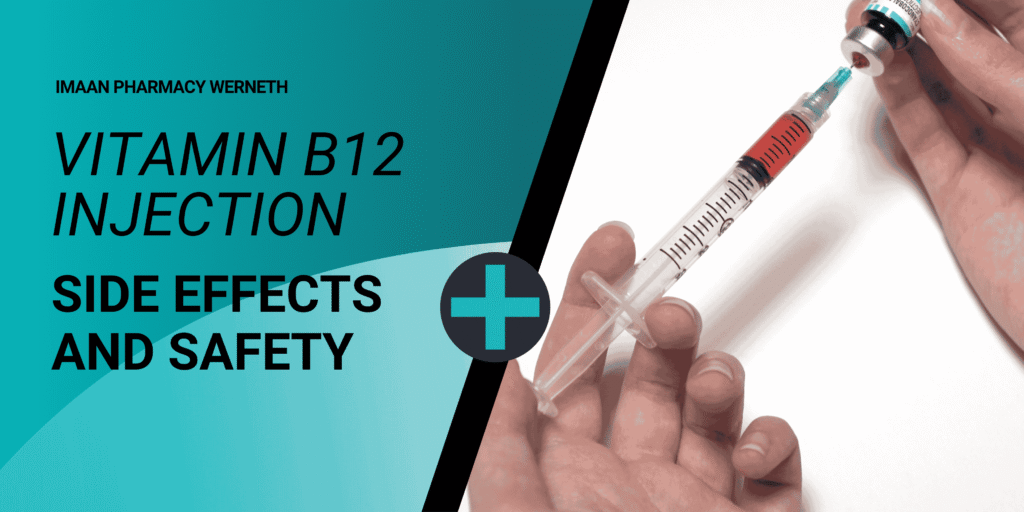
Side effects vs. emergency symptoms: a practical decision guide
Use this quick framework to decide what to do next. If you’re unsure, err toward contacting a clinician.
- Usually manageable: mild soreness, slight redness, small bruising, short-lived headache or nausea that resolves quickly.
- Needs prompt advice: rash/hives, persistent injection-site swelling beyond a few days, symptoms that repeatedly intensify with each dose.
- Emergency: breathing difficulty, facial/lip swelling, severe allergic symptoms, fainting, or rapidly worsening neurologic deficits.
FAQ
What are the negatives of B12 injections most people experience?
Most commonly, people notice injection-site pain, redness, or swelling. Some also report mild systemic effects like headache or nausea shortly after the dose. Rarely, allergic reactions occur.
Can B12 injections cause allergic reactions?
Yes, but it’s uncommon. Seek urgent help if you develop hives, facial swelling, wheezing, shortness of breath, or faintness after an injection.
Are B12 injection side effects worse if I already have neurologic symptoms?
It depends on the person and the cause of deficiency. Because B12 deficiency itself can affect nerves, any new or rapidly worsening neurologic symptoms should be assessed promptly rather than assumed to be a normal side effect.
Conclusion: safety comes from the right plan, not just the needle
So, what are the negatives of B12 injections? In real life, most negatives are predictable and manageable—mostly injection-site discomfort and occasional mild short-term symptoms. The bigger safety focus is identifying the cause of deficiency, using an appropriate dose and schedule, monitoring response, and acting quickly if allergic reactions or concerning neurologic changes appear.
Next practical step: If you’re planning injections (or already started), schedule a short clinician check-in to confirm the cause of your low B12 and review a safety/monitoring plan—especially what symptoms mean “wait and observe” versus “contact urgently.”
Discussion